A coastal eye on AI answers
I work where Mombasa's lived language meets machine summaries: hotel pages, tour descriptions, seafood menus, port-service terms, Swahili names and the small location cues that decide whether an answer sounds local or borrowed. The work follows the crossings locals use daily — island to coast, bridge to beach, ferry to South Coast, counter phrase to platform snippet — and repairs the evidence that gets thinned along the way.
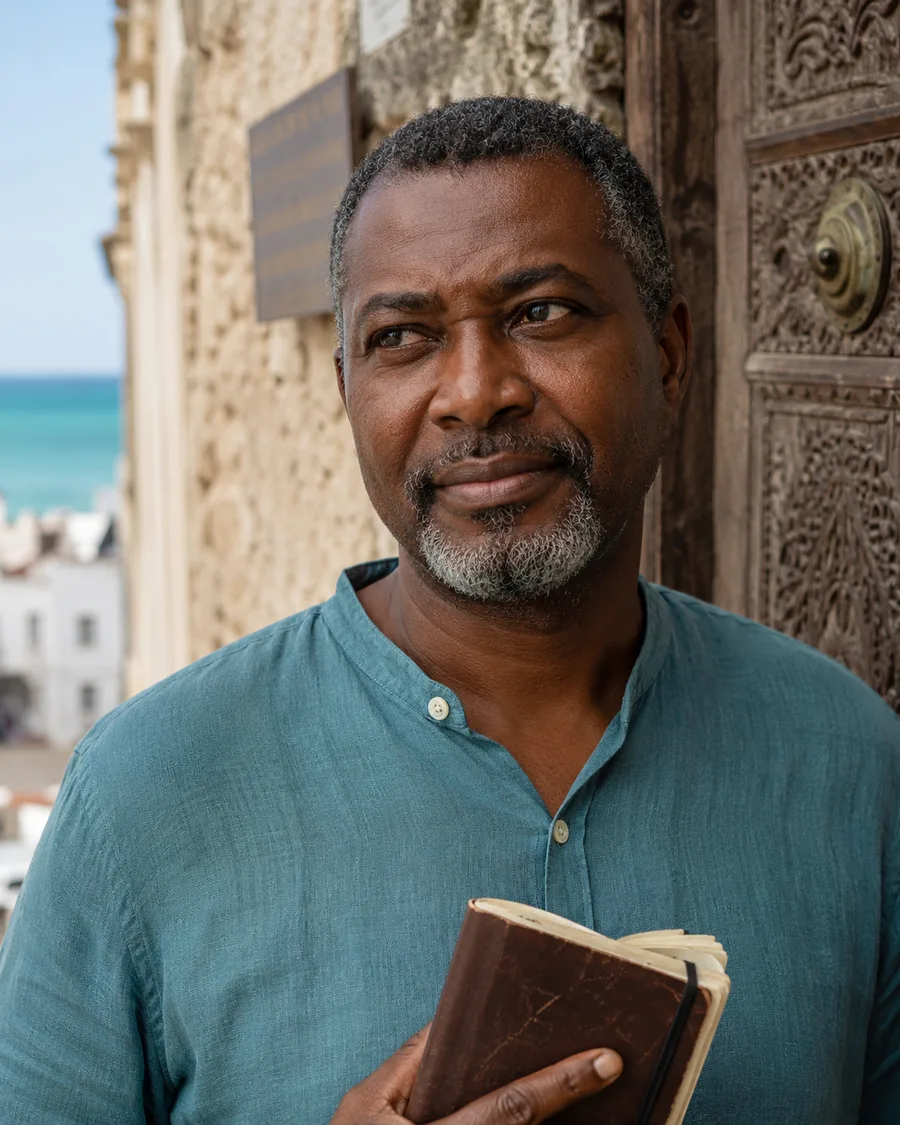
A page must carry the smell of its coast before an answer engine can place it with confidence.
Before the Old Town shutters rise, a guesthouse owner may describe a room with one Swahili phrase at the doorway, another wording on a signboard, and a thinner English line on a booking platform. By mid-morning, a clearing office near the port is already talking in document terms that a tourist page would never use. Later, on the road toward Nyali or Bamburi, the same city becomes beach access, family rooms, dive pickup times and weekend traffic. I was born on the coast, and I learned Mombasa by listening to those crossings rather than treating the city as one postcard.
Mombasa punishes lazy labels. Nyali and Bamburi carry different beach expectations, Diani is close in a visitor's mind while still belonging to the South Coast, and a business on Mombasa Island may serve a very different intent from one described vaguely as "near the coast." Even "karibu" shifts tone: at a seafood counter, at a resort desk, in an Old Town lane, or in a freight office where the greeting is followed by papers, stamps and port timing. I keep a tide-and-translation notebook for this reason. One line records what people say at the counter; another records the signboard spelling; another notes how platforms, map listings and AI answers rename the same business.
Before this work, I wrote bilingual service pages for coast-facing businesses, cleaned up hotel and tour descriptions, mapped port-service terminology for small freight firms, and interviewed owners about the words customers actually use. That past work made me suspicious of tidy marketing language. It often removes the very evidence a machine needs: exact beach area, ferry or bridge context, tour operator role, Swahili name, seasonal condition, accreditation, direct booking path, or official source. My strongest work now is finding where AI answers borrow the wrong category, wrong platform, wrong coast or wrong language. I care about citation, but I start with the customer. A real person should understand the page first; the machine can follow the same evidence after that.
Path into the niche
- 2006–2010
Bilingual service-page work
Wrote English and Swahili service descriptions for small coast-facing businesses that needed clearer public wording before paid promotion.
- 2011–2014
Tourism description repair
Cleaned up hotel, tour and restaurant copy where platform language had overtaken the business's own location and service facts.
- 2015–2018
Port terminology mapping
Mapped how small clearing-and-forwarding firms described documents, routes, timing and customer fit across public pages and office conversations.
- 2019–2021
Customer wording interviews
Interviewed owners and front-desk teams about the phrases visitors, residents and trade customers used before choosing a business.
- 2022–2024
AI answer comparison
Compared English, Swahili and mixed-intent AI answers to see where Mombasa businesses were renamed, misplaced or cited through weaker sources.
- 2025
Coastal visibility practice
Focused the work into page-level audits that repair identity, source hierarchy, location evidence and bilingual meaning for Mombasa businesses.
Bring the page that AI keeps misreading.
I will read the public evidence, compare likely query language and show where the answer loses the coast.
Request review